Why soil organic carbon prediction matters for farmers
By Daniele Mos
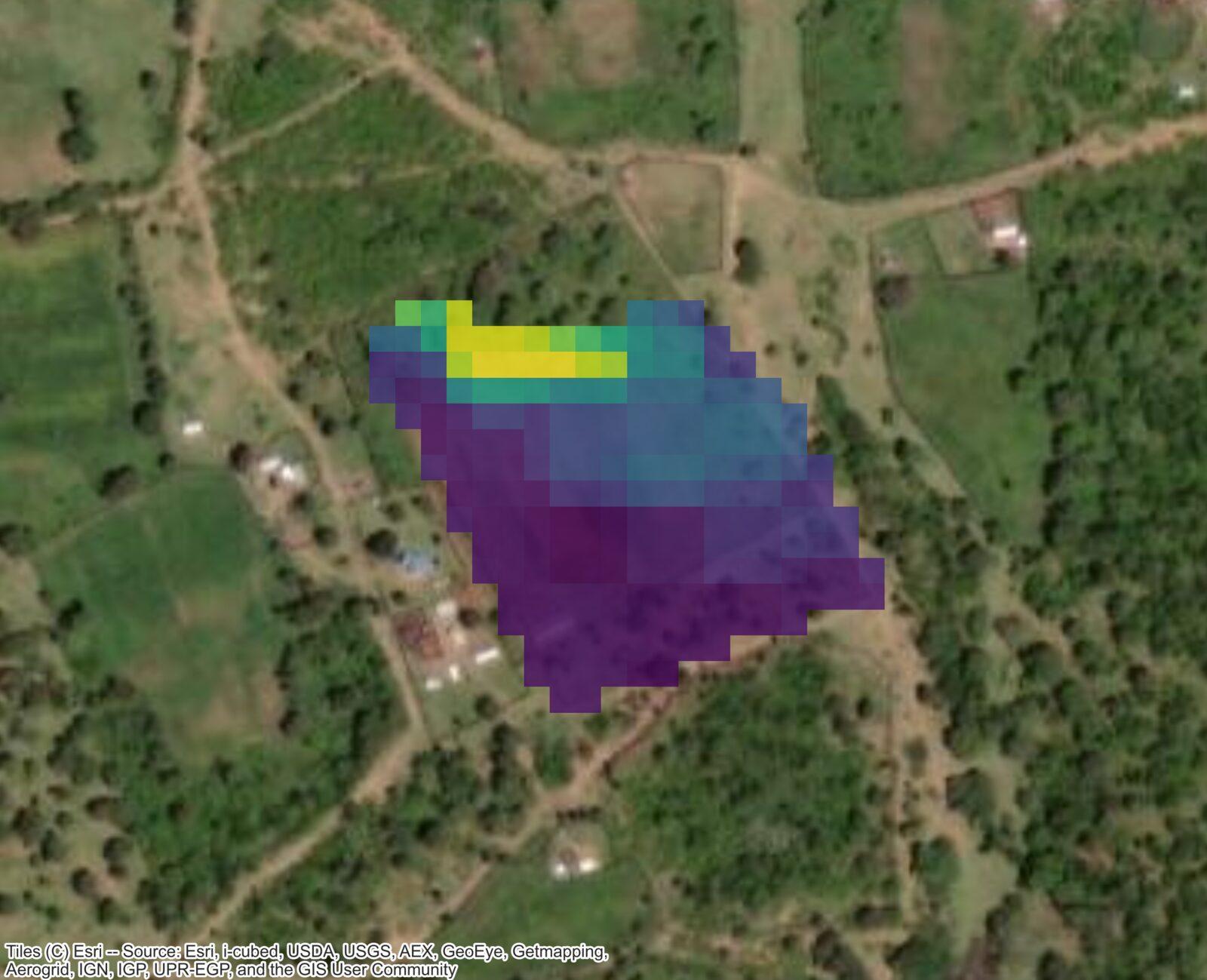
Soil organic carbon (SOC) is the single most consequential signal in the ground beneath a field. It governs how much water the soil can hold through a dry spell, how much nitrogen mineralises through the season, how stable the soil structure stays under heavy rainfall and how productive the field will be in five, ten, twenty years from now.
Until recently SOC was the variable farmers could only measure by sending samples to a lab: expensive, slow, point-based and outdated by the time the results came back. That has changed.
What high-resolution SOC mapping changes on the farm
At 10 metre resolution, every part of every field gets its own SOC reading, refreshed at the seasonal cadence. The variability that growers have always known exists, the heavy clay patch in the back corner, the lighter ground along the rise, the strip that always struggles in a dry year, all of it shows up on the map with numbers attached.
That changes three practical things:
1. Variable rate decisions become genuinely variable. Nitrogen, lime, gypsum and organic amendments: the inputs that interact most with SOC can be prescribed per square instead of per field. The economics shift when you can stop over-applying on the high-carbon ground and start under-applying where it is actually needed.
2. You can see the effect of a practice change within a season. Cover crops, reduced tillage, manure applications, compost: each one moves SOC at a known rate. With a baseline map and seasonal updates, the practice change stops being an act of faith and becomes a measurement.
3. Carbon income becomes accessible. Soil carbon programmes are now mature enough that growers can be paid for the carbon they build, but only if they can credibly measure it. High-resolution SOC mapping replaces the older, sparse, sampling-based MRV with a continuous, auditable record that holds up under scrutiny from a verifier.
What the technology actually does
Spatialise combines Sentinel-2 reflectance time series, Sentinel-1 radar, terrain data, weather records and a manageable number of ground samples into a spatio-temporal graph neural network. The model produces a per-pixel posterior over SOC density across an entire AOI, with uncertainty bands so the user knows where confidence is high and where the model is less sure.
Across our pilots, the predictions deviate from independent lab measurements by roughly 15% on a relative basis: a level that, paired with uncertainty bands, is fit for both agronomic decisions and audited MRV workflows.
The practical implication
Farmers do not need to choose between "manage the soil better" and "monetise the carbon you build". With the right measurement layer, both fall out of the same workflow. The lab samples still matter, they are the backbone of calibration, but they no longer have to bear the full weight of the management decision.
If you would like to see SOC mapping on a field you know well, get in touch and we will build you a baseline.